
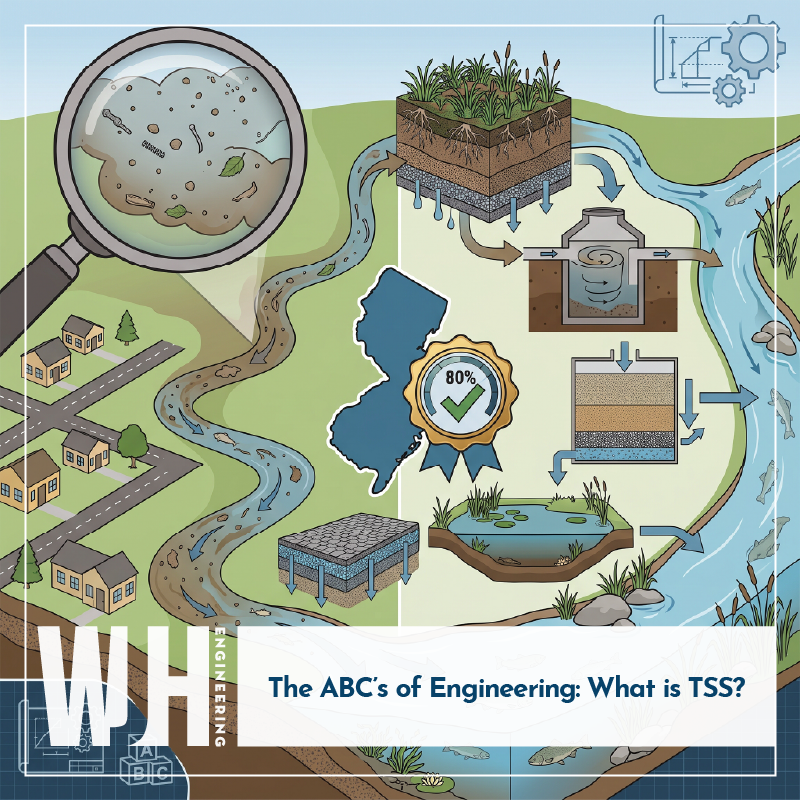
Total Suspended Solids (TSS) are tiny particles—such as sediment, dirt, organic matter, and debris—that are carried by stormwater runoff. When these particles enter streams, rivers, and lakes, they can reduce water quality, harm aquatic habitats, and transport pollutants like phosphorus, heavy metals, and bacteria.
In New Jersey, managing TSS is a key component of stormwater design. The state’s stormwater regulations generally require new major developments to achieve an 80% reduction in TSS from the water quality design storm using approved Best Management Practices (BMPs). This requirement helps protect local waterways.
Engineered devices and strategies such as bioretention systems (rain gardens), manufactured treatment devices, sand filters, and wet ponds are commonly used to capture and remove suspended solids before runoff leaves a site.
Understanding TSS requirements early in the planning process can streamline permitting, and the overall approval process. Reach out to WJH Engineering to find out how your project may be affected by this.