
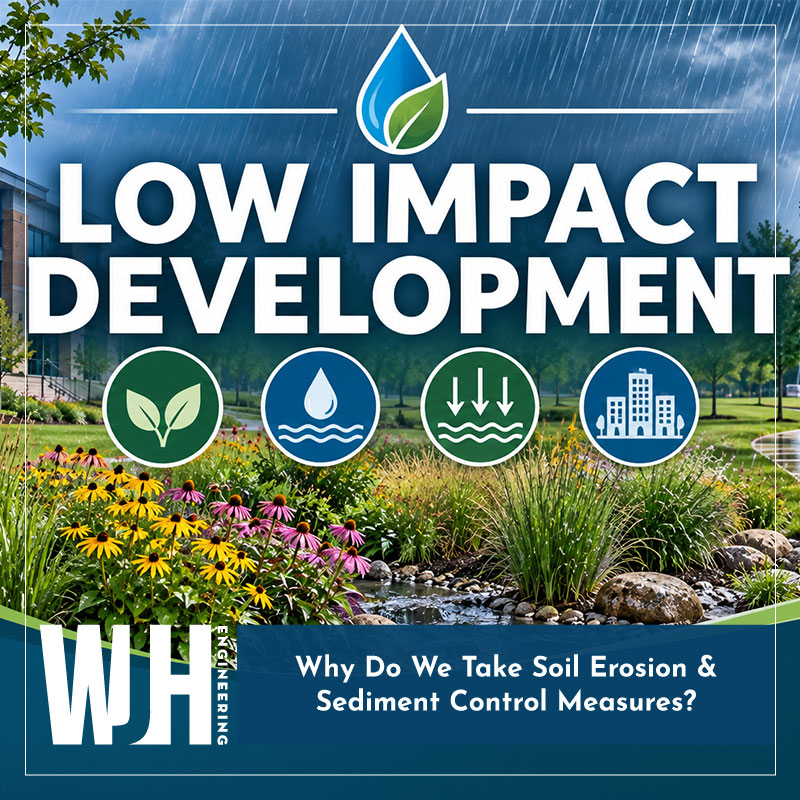
Low Impact Development or LID is a subset of Best Management Practices, or BMPs, that aim to reduce storm impacts through mindful site planning. Site design that mitigates runoff before treatment allows for smaller and fewer structural BMPs — reducing site disturbance and
cost. For this blog we will focus on nonstructural LID-BMPs.
Vegetation and landscaping reduce runoff volume and provide a pervious surface for groundwater recharge. Preservation of existing vegetated area and using native ground covers and grass areas slows runoff, allowing for infiltration into the soil.
Minimizing land disturbance during all phases of construction can reduce post- construction runoff volumes and pollutant loads. Conforming your development to the existing terrain limits clearing and grading for your project.
Streets and sidewalks add considerable impervious coverage to every site. N.J.A.C 5:21 (RSIS) standards provide guidance on minimum standards for street width. Adding landscape medians can reduce impervious area as well. Pervious pavement is a great option to support
stormwater management.
Increasing time of concentration reduces peak runoff rates. Reducing slopes throughout the site and using dense vegetated conveyance are ways Low Impact Development can be utilized to increase the time of concentration.
Utilizing every tool available is paramount for cost efficiency and resourceful design. Reach out to WJH Engineering for your engineering and site design services.